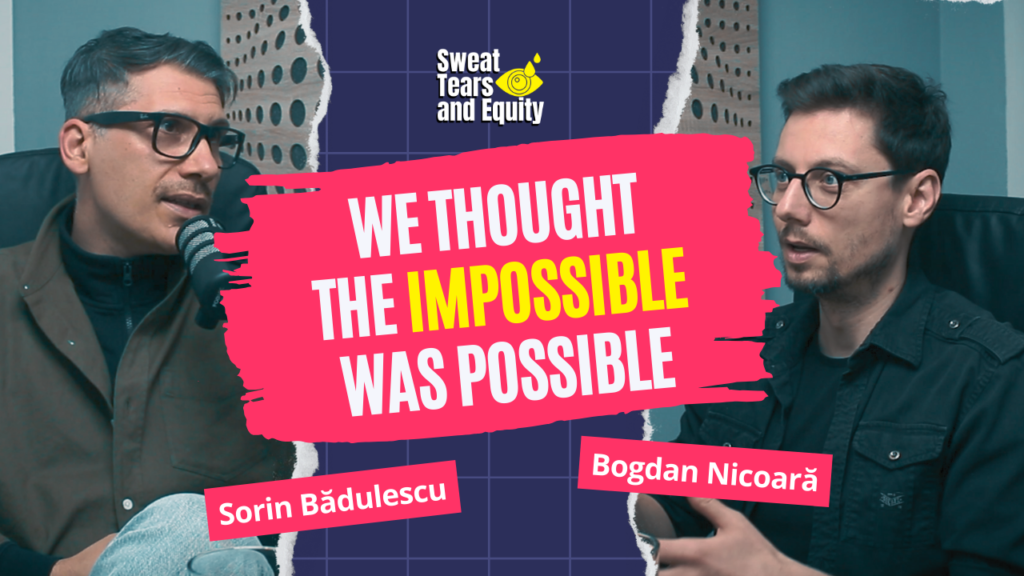
Bogdan Nicoara, CEO and founder of Bright Spaces has navigated the founder’s journey with remarkable resilience and grit. From his early days of entrepreneurship in high school to leading a tech startup in the competitive real estate market, Bogdan’s journey was an interesting one, to say the least. In a candid discussion on the “Sweat, Tears, and Equity” podcast, he divulges three crucial lessons every founder should learn. These insights highlight the founder’s multifaceted role and offer a roadmap for navigating the startup ecosystem with agility and foresight.
Lesson #1 – Balancing vision with pragmatism as a founder
One of the most important lessons that Bogdan shares, and one that he has learned the hard way, is about the true role of the founder in the team, and, most importantly, the delicate balance they have to strike, a balance between grand vision and pragmatism. The founder must emphasize the vision, advocating for the long-term objectives and turning the seemingly impossible into reality. This often leads to overpromising, in an effort to motivate the team. However, this same optimism and visionary approach can pose a challenge when dealing with investors. The founder must navigate these relationships with a more pragmatic mindset, aiming to underpromise and overdeliver, ideally.
Bogdan admits to having struggled with this balance initially, applying the same visionary promises both to his team and investors. This led to a series of unmet promises in the early days. Despite these challenges, the business continued to grow, albeit at a slower rate. This discrepancy between promise and performance underscored the need for a more pragmatic external stance while maintaining ambitious internal goals. The lesson here is invaluable, highlighting the importance of managing expectations and being more grounded in communications with external stakeholders.
To succeed at this, it also takes the full support of investors who understand the situation and provide their expertise whenever needed. Bogdan was lucky in this aspect, as the encouragement and advice of investors helped him navigate the tough times successfully.
This leads us to the second important lesson:
Lesson #2 – The art of strategic fundraising: Blending different types of investors for start-up success
The second important lesson that Bogdan shares is the strategic mix of investors in a start-up’s cap table. While some founders have a mix of investors in their cap table, few take a strategic approach to do this. But luckily, he figured this out early enough in Bright Spaces’ journey. Bogdan has successfully aligned VCs and angels, creating a synergistic mix that has propelled their growth. Initially, the strategy involved learning from the successes and failures of various investment approaches, leading to a diverse first round of funding. This mix included early-stage VCs, institutional groups of angels, and individual investors, each bringing unique value beyond mere capital.
This diverse investment strategy continued through subsequent funding rounds, attracting European funds and new angel investors, particularly those interested in the real estate sector. Despite concerns about overcomplicating the cap table, this approach has fostered a productive ecosystem of support, advice, and resources from their investors.
Managing a diverse group of stakeholders is inherently challenging, but it’s crucial for growth. The dynamic changes as the company evolves, with different phases requiring varied levels of engagement with investors. Bogdan’s current focus is on leveraging this broad investor base for strategic advice and support, anticipating that the nature of these relationships will naturally evolve as they progress through further funding rounds and business development stages.
By realizing the importance of the founder-investor relationship, Bogdan has made concerted efforts to communicate openly with his investors, adjusting the strategy to be more in tune with reality. This involved revising the business plan, implementing cost-cutting measures, and, regrettably, making some tough personnel decisions. These actions were necessary for the health and sustainability of the company.
Lesson #3 – Product-led start-up or a sales-led start-up?
The last important lesson is about sales. Bogdan acknowledged that founders, especially those of VC-backed start-ups, face a common dilemma – they have to decide, at least in the early days, if they will focus on developing great products or taking the role of a salesman. This is because, while most are technical founders who pour their hearts into their products, they must deliver on the returns promised to their investors. Bogdan says that there should be a focus because doing both is almost impossible. He learned this thing early enough, so he managed to focus on the sales part of the business, hitting the required milestones.
The second aspect of selling your product is understanding who you’re selling to. A founder has a diverse group of audiences and a different pitch should be used for them. It’s one thing selling your product to investors, another for partners, and another for clients. The founder shares insights on tailoring these communications to address specific stakeholder needs, underscoring the evolving nature of these value propositions as the startup matures and diversifies its outreach.
Conclusion
Bogdan’s journey and insights into the startup world underscore three pivotal lessons: the need to balance visionary zeal with pragmatism, the strategic advantage of a diverse investor base, and the critical shift from product development to sales focus. These lessons reflect the complexities of the founder’s role and serve as valuable guidance for navigating the startup ecosystem with resilience and strategic acumen. If you want to learn more valuable lessons from Bogdan’s journey, check out the full episode below:
Have you found these lessons helpful?
Click the image and check out the full conversation with Bogdan Nicoară in the first episode of our podcast – Sweat, Tears and Equity